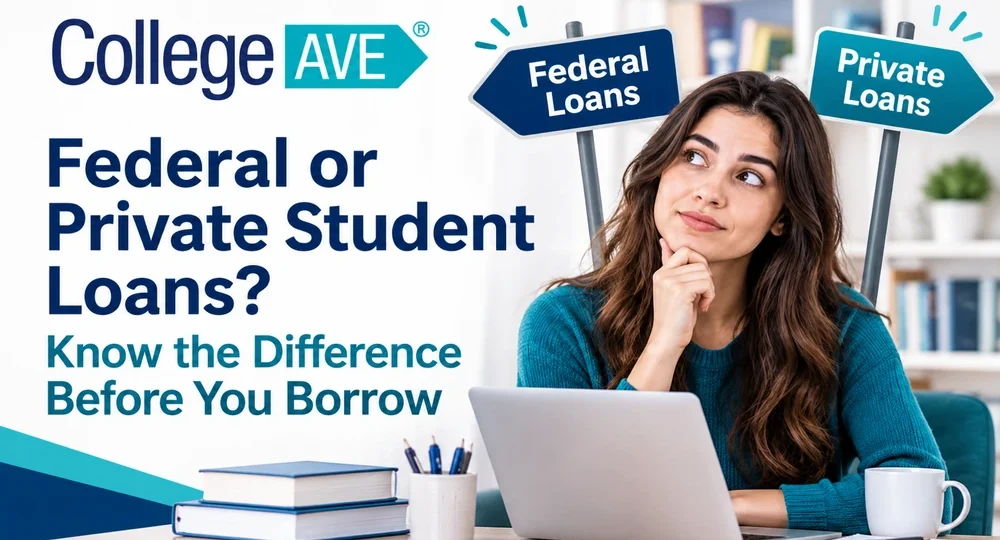
Federal or Private Student Loans? Know the Difference Before You Borrow
Paying for college is an expensive financial decision. Many students do not have enough money saved or support from their families to pay for all of their education. Loans can provide extra money to pay for college; however, there are two types of loans (federal and private) which should be considered before signing a contract.
Federal vs. Private Loans: What Sets Them Apart?
The federal government offers loans to students. These loans are usually at a set rate, and there are many different ways to pay back the money. In addition, some people who borrow money from the federal government might be able to have their loan paid off through income-based repayment programs, or have their loan forgiven.
Private loans are issued by banks, credit unions, and other lenders. The terms of each private loan will vary based upon the specific lender and the borrower’s credit score. In some cases, private loans will have very low interest rates, however it may be difficult to get approved for a private loan if you do not have a good credit score or a co-signer.
Compare Your Options Before Making a Choice
A closer look at federal vs. private student loans guide will give you a better understanding of the main differences between them. Before making a decision on what type of loan to take out, think about the following:
- Interest Rates: While the Federal rate is set by law and remains at a constant rate, private interest rates may vary and could be either fixed or variable.
- Repayment plans: Federal loans offer more government-backed options.
- Credit checks: Most federal student loan programs do not check your credit report before making a decision about whether or not to make a loan to you, however, most private student loan programs will review your credit report prior to making a decision as to whether or not they want to make a loan to you.
- Borrower benefits: The benefits of a federal loan over a private loan can include certain protections that are not available with a private loan.
Borrow With a Clear Repayment Plan
You should first look at federal funding opportunities before looking into private loan providers. Only take out as much money as you will need for your education, and try to get an idea of how much you will pay each month in the future. Knowing the terms of your student loans can save you from unexpected costs down the line.
The borrower has more options than just the lowest interest rate advertised. He should consider the total amount he will be paying back (full costs), how long he will have to repay the loan (repayment rules) and what other benefits may come from taking out a loan (benefits). If the borrower takes the time to make a well-thought-out decision now, then after graduation, he will find it a lot easier.